
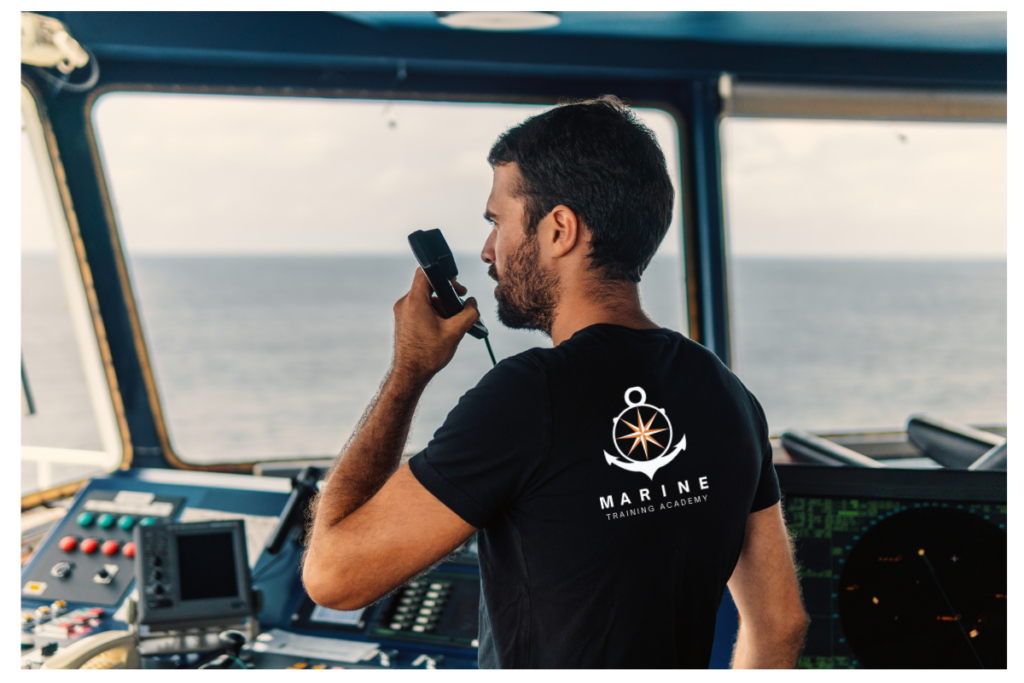
Course Overview
Marine Training Academy delivers nationally recognised marine radio training through the MARSS00011 Marine Radio Operator's VHF Skill Set and MARSS00010 Marine Radio Operator's VHF and HF Skill Set.
Training covers marine radio procedures, frequencies, call signs, the phonetic alphabet, routine communications, distress and urgency communications, safety communications and Digital Selective Calling (DSC).
The Short Range option focuses on VHF marine radio operation, while the Long Range option provides broader training across both VHF and HF marine radio systems.
Short Range or Long Range?
SROCP – Short Range
MARSS00011 Marine Radio Operator's VHF Skill Set provides nationally recognised training in VHF marine radio operation.
LROCP – Long Range
MARSS00010 Marine Radio Operator's VHF and HF Skill Set provides nationally recognised training in both VHF and HF marine radio operation.
Marine Radio Operator's Certificate of Proficiency
Nationally recognised marine radio training covering the MARSS00011 Marine Radio Operator’s VHF Skill Set and MARSS00010 Marine Radio Operator’s VHF and HF Skill Set for people operating marine radio equipment on Australian vessels.
Course at a Glance
- VHF Skill Set
- MARSS00011 Marine Radio Operator's VHF Skill Set
- VHF & HF Skill Set
- MARSS00010 Marine Radio Operator's VHF and HF Skill Set
- Training Focus
- Marine VHF and HF radio operation and communications
- Training Provider
- Marine Training Academy
- RTO Number
- 30683
- Online Theory
- Start anytime
- Nationally Recognised
- Yes
Why Choose This Course?
Marine Training Academy (RTO 30683) delivers nationally recognised marine radio training through flexible online learning and practical training conducted by experienced maritime professionals.
Course Highlights
✓ Start Online
Begin your marine radio theory online without waiting for a scheduled classroom intake.
✓ Short Range & Long Range Options
Choose between the SROCP Short Range option or the broader LROCP Long Range option depending on your marine radio requirements.
✓ Practical Radio Training
Develop practical marine radio communication skills including routine calls, distress and urgency procedures, safety communications and Digital Selective Calling (DSC).
✓ Flexible Study
Work through your online theory at your own pace around work, sea service, family and other commitments.
✓ Ongoing Student Support
Receive support from the Marine Training Academy team throughout your marine radio training.
✓ Commercial Maritime Focus
Develop marine radio communication skills relevant to commercial vessel operations and maritime certification pathways.
Course Details
Who Is the Marine Radio Course For?
Marine Training Academy’s SROCP Short Range and LROCP Long Range marine radio courses are designed for people who need the knowledge and practical skills to operate marine radio equipment, including those working on commercial vessels or progressing through an AMSA maritime certification pathway.
Suitable for commercial maritime personnel who use VHF or HF marine radio equipment as part of their duties on Australian commercial vessels.
Suitable for Coxswains and small commercial vessel operators who require marine radio competency for vessel operations or an applicable AMSA certification pathway.
Relevant for Masters, skippers and maritime personnel who need VHF and HF marine radio capability for commercial vessel operations.
Suitable for crew and operators working aboard charter, tourism and other commercial passenger vessels.
Relevant for commercial fishing vessel crew, skippers and operators who use marine radio equipment for operational and safety communications.
Suitable for people working aboard workboats, marine construction vessels and other commercial marine support operations.
Suitable for maritime personnel completing marine radio training as part of their progression towards an applicable AMSA Certificate of Competency.
- What marine radio licence or certificate do I need in Australia?
- What is the difference between SROCP and LROCP?
- Do I need a Short Range or Long Range marine radio certificate?
- What marine radio qualification do I need for commercial vessel operations?
- Where can I complete a VHF and HF marine radio course?
Course Fees & Payment Options
Marine Training Academy offers both SROCP Short Range and LROCP Long Range marine radio training for commercial maritime personnel. Both pathways are nationally recognised Skill Sets and are priced clearly with no hidden training costs.
$289 AUD
One clear course fee for either the Short Range or Long Range marine radio training pathway.
- Online marine radio learning resources
- Practical radio training
- Trainer support
- Knowledge and practical assessment activities
- Nationally recognised Skill Set training
Your Marine Radio Course Includes
Course fees are fixed and clearly advertised on our website. A full list of course inclusions, exclusions, additional costs and related enrolment information is published in our Course Enrolment Guide. For further details, please contact [email protected].
- How much does the marine radio course cost?
- Is the SROCP Short Range course $289?
- Is the LROCP Long Range course $289?
- Does the course fee include practical marine radio training?
- Is online marine radio learning included?
- Are assessments included in the course fee?
- Which course should I choose, SROCP or LROCP?
Training Delivery & Assessment
Marine Training Academy delivers both the MARSS00011 Marine Radio Operator’s VHF Skill Set and the MARSS00010 Marine Radio Operator’s VHF and HF Skill Set through flexible online learning and practical marine radio training, allowing students to study at their own pace while developing the communication skills required for commercial maritime operations.
Complete your marine radio theory online from anywhere in Australia. Access your learning materials 24/7 and progress through the course at your own pace.
Apply your knowledge using marine radio equipment and recognised maritime communication procedures, including routine calls, safety communications, distress and urgency procedures and Digital Selective Calling (DSC).
Our trainers provide guidance throughout your marine radio training, helping you understand radio procedures, prepare for practical activities and successfully complete your assessment requirements.
Assessment includes knowledge-based activities and practical demonstrations to assess your ability to correctly use marine radio equipment and apply recognised maritime communication procedures relevant to the selected Skill Set.
Students can complete the SROCP Short Range pathway through MARSS00011 or the broader LROCP Long Range pathway through MARSS00010, depending on their commercial maritime and certification requirements.
There are no fixed weekly classes for the online component, allowing you to balance marine radio study with work, sea service, family and other commitments before completing the practical training and assessment.
- Can I complete the marine radio theory online?
- Do I need to complete practical marine radio training?
- How is the marine radio course assessed?
- What is the difference between SROCP and LROCP training?
- Can I complete the Long Range marine radio course instead of Short Range?
- Are trainers available if I need help with the online learning?
- How are MARSS00011 and MARSS00010 assessed?
Marine Radio Certification & Career Pathways
Marine Training Academy delivers nationally recognised marine radio training through the MARSS00011 Marine Radio Operator’s VHF Skill Set and the MARSS00010 Marine Radio Operator’s VHF and HF Skill Set. These pathways support commercial maritime personnel who require marine radio competency for vessel operations and may form part of certification requirements for certain AMSA Certificates of Competency.
The Short Range Operator Certificate of Proficiency (SROCP) pathway supports VHF marine radio operations and is commonly used by commercial vessel personnel operating within applicable near coastal areas.
The Long Range Operator Certificate of Proficiency (LROCP) pathway supports both VHF and HF marine radio operations and provides broader radio capability for commercial maritime personnel.
Marine radio certification forms part of the certification requirements for the AMSA Coxswain Grade 1 Near Coastal pathway. Students should ensure they hold the appropriate marine radio certificate for their intended AMSA certification pathway.
The Long Range Operator Certificate of Proficiency (LROCP) is used within the AMSA Master <24m Near Coastal certification pathway and supports broader commercial maritime radio operations.
Marine radio qualifications are relevant across charter, tourism, passenger, ferry, commercial fishing, workboat and marine support vessel operations where safe and effective radio communication is required.
For many commercial maritime students, completing LROCP Long Range training can be the preferred option because it provides broader radio capability and may reduce the need to upgrade their marine radio qualification later as they progress through higher maritime certification pathways.
Typical Marine Radio Pathways
- What is an SROCP marine radio certificate?
- What is an LROCP marine radio certificate?
- What is the difference between Short Range and Long Range marine radio training?
- What marine radio certificate do I need for Coxswain Grade 1?
- What marine radio certificate do I need for Master <24m Near Coastal?
- Is LROCP better for a long-term commercial maritime career?
- Can I complete Long Range marine radio training instead of Short Range?
- Where are marine radio qualifications used in the commercial maritime industry?
Frequently Asked Questions
Find answers to the most common questions about Marine Training Academy’s SROCP Short Range and LROCP Long Range Marine Radio courses, including online learning, simulator-based training, live assessment and commercial maritime pathways.
Yes. Marine Training Academy (RTO 30683) delivers the nationally recognised MARSS00011 Marine Radio Operator’s VHF Skill Set and MARSS00010 Marine Radio Operator’s VHF and HF Skill Set.
Yes. The learning component can be completed online using Marine Training Academy’s online learning platform and integrated marine radio simulator. Students can work through the course at their own pace before completing the required live assessment with an assessor.
The online simulator allows students to practise marine radio procedures and communication scenarios in a simulated operational environment. This helps develop confidence and practical communication skills before the live assessment.
Assessment includes online knowledge assessment and a live face-to-face assessment with a qualified assessor. The live assessment may be completed in person or through an approved digital platform such as Microsoft Teams or Zoom, where the required assessment conditions can be met.
Yes, where appropriate. Marine Training Academy may conduct the live assessment through an approved digital platform such as Microsoft Teams or Zoom, provided the assessor can verify the student’s identity, observe the required assessment activities and ensure the applicable assessment conditions are satisfied.
The online learning is self-paced, so completion time will vary between students depending on previous knowledge, dedicated study and individual learning needs. Once the required online learning and assessment activities are completed, students can arrange their live assessment.
No previous marine radio experience is required to begin the training. The course develops the knowledge and practical communication skills required for the selected Short Range or Long Range pathway.
The SROCP Short Range pathway relates to VHF marine radio operation, while the LROCP Long Range pathway provides broader marine radio training across VHF and HF systems.
Both pathways support marine radio operations. Many commercial maritime students choose the LROCP Long Range pathway because it provides broader radio capability and may reduce the need to upgrade their marine radio qualification later as their maritime career progresses.
Yes. Marine radio certification may form part of the requirements for certain AMSA Certificates of Competency. Students should ensure they complete the appropriate marine radio pathway for their intended commercial maritime certification.
Flexible Marine Radio Training
Complete your marine radio learning online, practise using our integrated simulator and complete your live assessment either in person or, where appropriate, through Microsoft Teams or Zoom.
Talk to a Course Adviser
Get personalised guidance about course selection, AMSA certification pathways, practical workshops and enrolment.